“Do I need to learn German to C1 level to find a job?” is one of the most common questions people ask themselves before moving abroad. The answer is almost always less intimidating than it seems: the myth that you need to be fluent in the local language before you can enter the European job market stops many strong candidates from sending their first application.
The reality is more nuanced. The language level you need depends not on the country as a whole, but on your specific profession, industry, and even the size of the company. Let’s look at what you actually need — by industry rather than in general terms.
Why Does the C1 Myth Persist?
There is some truth behind it: for professions where language itself is the main tool of the job — such as law, teaching, public-sector roles, and medicine involving direct patient communication — a high level of language proficiency really is essential. But these professions represent only part of the labor market.
The problem is that language requirements for highly language-dependent professions are often generalized to the entire job market. As a result, a candidate who could already qualify for a position today may postpone their job search for a year to attend language courses that may not actually have been necessary.
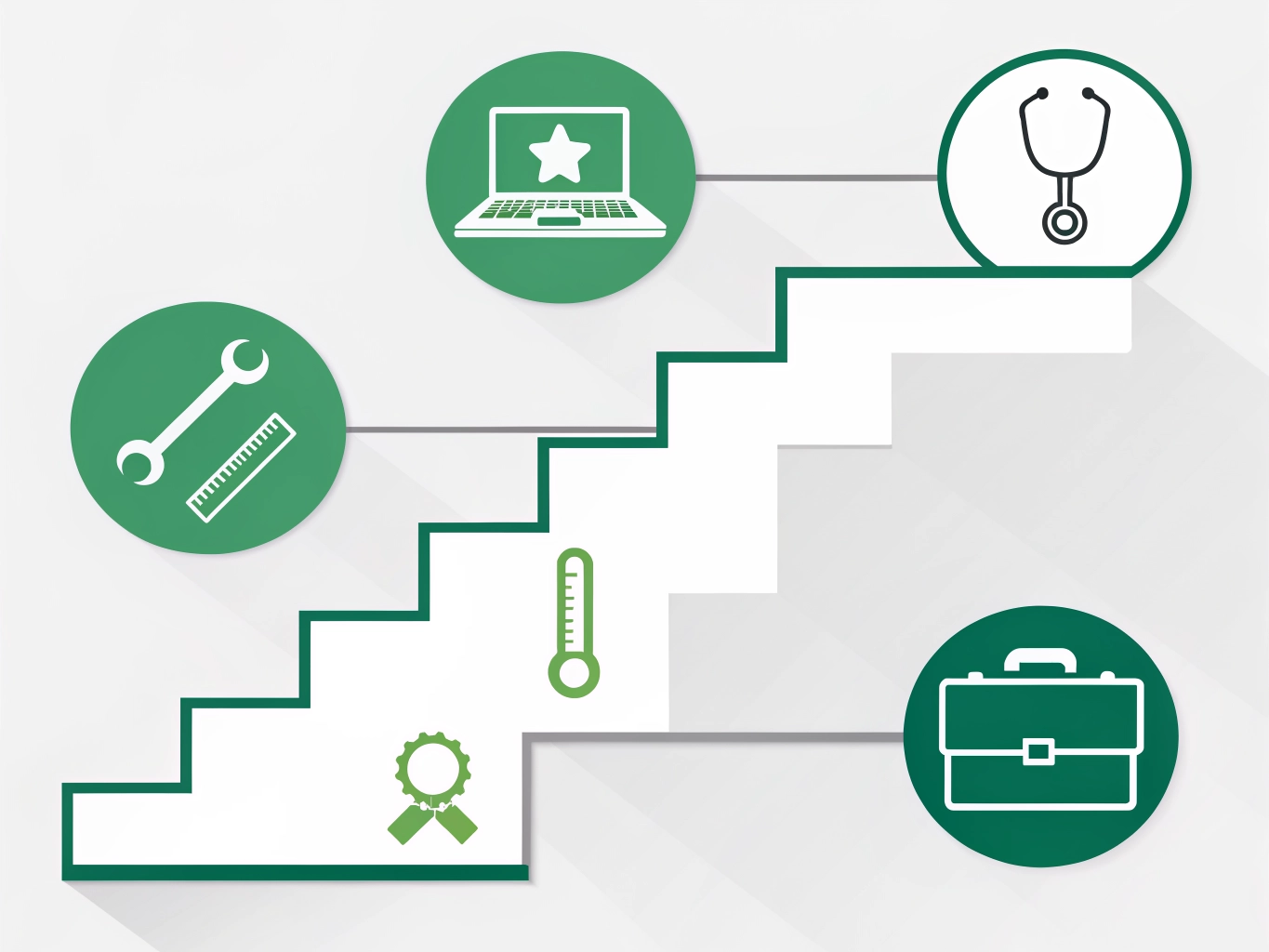
Breakdown by Industry
IT and Engineering
International teams in technology companies and manufacturing are increasingly using English as their working language. B1–B2 English is often enough to enter the field, while German is more important for everyday life and integration than for the job itself.
One important nuance: the larger and more international the company, the more likely it is that English will be the primary working language. In smaller local companies, even in technology, German may already be required at B2 level.
Healthcare
Here, the distinction is crucial. For positions involving direct patient contact, such as doctors and nurses, B2–C1 German is generally required for professional licensing. These requirements are tied to professional recognition and licensing rather than simply being an employer preference.
For laboratory and research positions without direct patient contact, language requirements may be considerably more flexible.
Finance and Consulting
In large international companies, including major consulting firms and investment banks, English is often sufficient for entry-level positions, especially analytical roles.
However, career progression and work with local clients will often require German to reach B2–C1 within the first one or two years.
Services and Retail
Requirements tend to be highest here in practical, everyday terms. Direct communication with customers almost always requires confident B2 German, and often something closer to C1.
The reason is simple: these jobs involve spontaneous, informal conversations rather than carefully prepared business correspondence.
Engineering Trades and Skilled Manual Work (Handwerk)
A practical B1–B2 level is often enough: you need to understand instructions and safety procedures and communicate effectively with your team.
This is a working level of language rather than a literary one — and it can be much more realistic to develop through 6–12 months of intensive practice than it may seem at the beginning.
How to Figure Out What You Actually Need
- Look at real job postings in your field, rather than general articles about the German labor market. Phrases such as “fließende Deutschkenntnisse” (fluent German) and “gute Deutschkenntnisse” (good German) indicate different entry thresholds.
- Pay attention to the company’s working language, not just the country. An international startup and a small German family-owned company in the same city may have completely different expectations.
- Don’t confuse the level needed to get hired with the level needed for comfortable living. You can find a job with B1–B2 in a number of industries, but everyday life — doctor’s appointments, conversations with neighbors, and dealing with bureaucracy — becomes easier with a higher level. You can continue improving your German after you start working.
Approximate Minimum Language Levels by Industry
| Industry | English | German |
|---|---|---|
| IT (international company) | B2–C1 | A2–B1 may be enough to start |
| IT (local company) | — | B2 |
| Healthcare (direct patient contact) | — | B2–C1 (required for licensing) |
| Finance / Consulting (international) | B2–C1 | B1, progressing to B2 during the first year |
| Services / Retail | — | B2–C1 |
| Handwerk / Skilled trades | — | B1–B2 (practical) |
These are general guidelines, not strict requirements. The final language requirement is always determined by the individual employer and position.
What to Do If Your Language Level Is Still Too Low
- Start applying for positions with lower language requirements. Look for international teams and companies where English is the working language, while continuing to improve your German alongside your job. This is often faster than spending years studying without getting practical experience.
- Be honest about your current level. Don’t exaggerate your proficiency. A mismatch between your stated and actual level during an interview can cost you far more trust than honestly stating that you are at B1.
- Look for phrases such as “Grundkenntnisse” or “Deutschkenntnisse von Vorteil”. These indicate that German is either expected only at a basic level or considered an advantage rather than a strict requirement.
Conclusion
The language level you actually need is determined not by the country as a whole and not by some abstract rule that says “you need C1,” but by your specific profession, industry, and the company’s working language.
Before postponing your job search for another year of language courses, look at the actual requirements in job postings for your profession. You may find that the door is already open much earlier than you think.